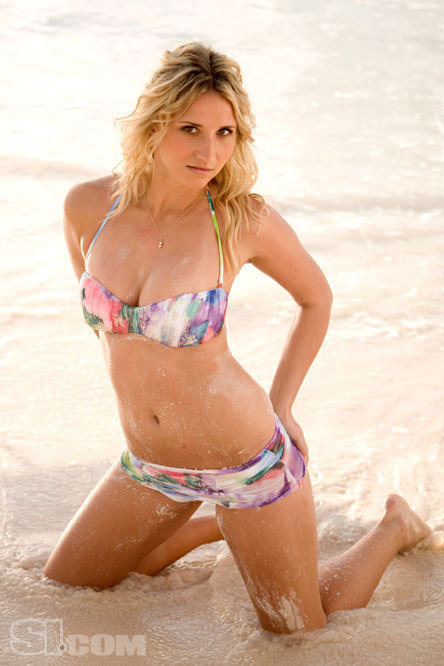
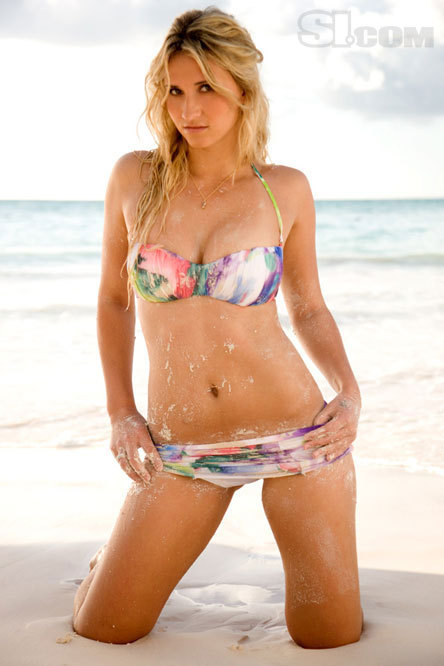
Tatiana Golovin tennis player

Tatiana Golovin Russian: Татья́на Голови́н; born January 25, 1988 is an inactive Russian-born French professional tennis player. She is best known for her explosive forehand, which is said to be one of the best at the time. She notably won the 2004 French Open mixed doubles event with Richard Gasquet, and reached the singles quarterfinal at the 2006 U.S. Open, losing to the eventual champion Maria Sharapova. The 23-year-old's highest singles ranking to date is 12. However, just as she began experiencing success, in 2008, she was diagnosed with a career threatening disease, Ankylosing spondylitis, and was forced to quit playing competitive tennis.
Golovin spent six years at Nick Bollettieri's tennis camp in Bradenton, Florida. She is currently coached by former World No. 1 Mats Wilander, having previously been coached by Brad Gilbert and Dean Goldfine.
Contents
* 1 Career review
o 1.1 Tour debut (2002–2003)
o 1.2 2004
o 1.3 2005
o 1.4 2006
o 1.5 2007
o 1.6 2008
o 1.7 2009
* 2 Major finals
o 2.1 Grand Slam finals
+ 2.1.1 Mixed doubles: 1 (1-0)
* 3 Career finals
o 3.1 Singles: 7 (2-5)
* 4 Singles performance time line
* 5 Personal life
* 6 References
* 7 External links
Career review
Tour debut (2002–2003)
Golovin made her ITF Circuit debut at Cagnes-sur-Mer (France) in 2002. She played in three more ITF events (including one semifinal) later that year, but she failed to qualify for the French Open.
In 2003, Golovin won her first WTA Tour main draw match at Indian Wells against No.146 Gisela Dulko (losing in the second round to Italian Francesca Schiavone). Golovin lost in the first round at Miami, Strasbourg and Roland Garros. She also played in four ITF Circuit events.
2004
At the Australian Open, Golovin (as No.354, with wild card) upset No.14 seed Anna Smashnova in the second round and No.23 seed Lina Krasnoroutskaya in the third round (on her 16th birthday), before falling to No.25 seed Lisa Raymond in the fourth round. It was just her second Grand Slam tournament and fifth Tour event she entered, and afterwards, on February 2, she rose to No.136 in the WTA ranking.
At Roland Garros, Golovin won the mixed doubles trophy with Richard Gasquet, as a Wild Card team, defeating Cara Black/Wayne Black. They became the youngest champions in 23 years (16 for Golovin, 17 for Gasquet). At Wimbledon, she reached the fourth round, with wins over Alina Jidkova, Francesca Schiavone, and Emmanuelle Gagliardi, before falling to World No. 10 Serena Williams.
Golovin reached the semifinal at the Paris Indoors, losing to Mary Pierce, after beating world No.10 Elena Dementieva in the quarterfinal for her first Top 10 win. In her first Tour grass court main draw at Birmingham, Golovin reached her first Tour singles final, which she lost to Maria Sharapova in 3 sets. Golovin reached her first Tier I quarterfinal in Montreal at the Rogers Cup, losing to Vera Zvonareva. Afterwards, she also reached the quarterfinal in Luxembourg, losing to eventual champion Alicia Molik.
Golovin was a member of the France Fed Cup team, that defeated Italy in the quarterfinal and Spain in the semifinal, before falling to Russia in the final, in which she defeated No.5 Svetlana Kuznetsova. During the year, she debuted in the Top 100 on February 16 (at No.91), and in the Top 50 on June 14 (at No.50).

tatiana golovin
tatiana golovin
tatiana golovin
tatiana golovin
tatiana golovin
tatiana golovin
tatiana golovin
tatiana golovin
tatiana golovin
tatiana golovin
tatiana golovin
tatiana golovin
tatiana golovin
tatiana golovin
tatiana golovin
tatiana golovin
tatiana golovin
tatiana golovin
tatiana golovin
tatiana golovin

shahid afridi batting

Batting
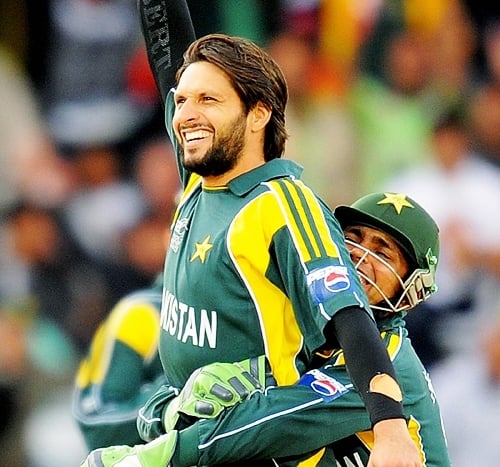
His general style of batting is very aggressive and attack oriented and has earned him the nickname "Boom Boom Afridi". Moreover, out of the seven fastest ODI centuries of all time, Afridi has produced three of them. As of 27 February 2011, he has an ODI strike rate of 113.83 runs per 100 balls, the third highest in the game's history. This attitude has been transferred to Test cricket as well, with Afridi scoring at a relatively high strike rate of 86.13. He has an approach to batting that can change the tempo of a game and inspire the mood of an audience, as shown when a mass exodus of spectators occurred in Pakistan in late 2005 following his dismissal from the crease.
He hits many sixes long and high, favouring straight down the ground or over midwicket and hit the longest ever six in the history of ODIs against Australia. His trademark shot is a cross-batted flick to the leg-side to a ball outside off stump.[40] However, his aggressive style increases his risk of getting out and he is one of the most inconsistent batsmen in cricket. This is reflected by the fact that he is the only player to score more than 6,000 ODI runs at an average under 25. Afridi has moved about the batting order, and this lack of consistency has made it difficult for him to settle. In the Indian subcontinent, where the ball quickly loses its shine, he prefers to open the batting however elsewhere he prefers to bat at number six.
Bowling
Afridi bowling his stock leg-spin delivery
Having started as a fast bowler, Afridi decided to start bowling spin after someone told him he was throwing. He modelled himself on Pakistan leg-spinner Abdul Qadir. Afridi began his career as primarily a bowler, however after scoring the fastest century in his maiden ODI innings more was expected of him with the bat. He considers himself a better bowler than batsman. While he is renowned for his aggressive batting, he is also a handy leg-spinner capable of producing a good mix of wicket taking balls. He has over 300 International wickets, most of which are from the ODI format. While his stock ball is the leg break, his armoury also includes the conventional off break and a 'quicker one' which he can deliver in the style of a medium-pacer. He bowls at a high speed for a spinner, resulting in lesser turn, and relying more on variations in speed. He occasionally sends down a bouncer to a batsman, which is very rare for a spin bowler.
Records and achievements
Test centuries
* In the column Runs, * indicates being not out
* The column title Match refers to the Match Number of the player's career
Test centuries Runs Match Against City/Country Venue Year
[1] 141 2 India Chennai, India MA Chidambaram Stadium 1999
[2] 107 12 West Indies Sharjah, United Arab Emirates Sharjah C.A. Stadium 2002
[3] 122 18 West Indies Bridgetown, Barbados Kensington Oval 2005
[4] 103 21 India Lahore, Pakistan Gaddafi Stadium 2006
[5] 156 22 India Faisalabad, Pakistan Iqbal Stadium 2006
ODI centuries
* In the column Runs, * indicates being not out
* The column title Match refers to the Match Number of the player's career
ODI centuries Runs Match Against City/Country Venue Year
[1] 102 2 Sri Lanka Nairobi, Kenya Nairobi Gymkhana Club 1996
[2] 109 65 India Toronto, Canada Toronto CSCC 1998
[3] 108* 146 New Zealand Sharjah, United Arab Emirates Sharjah C.A. Stadium 2002
[4] 102 204 India Kanpur, India Green Park 2005
[5] 109 294 Sri Lanka Dambulla, Sri Lanka Dambulla International Stadium 2010
[6] 124 296 Bangladesh Dambulla, Sri Lanka Dambulla International Stadium 2010
shahid afridi
shahid afridi
shahid afridi
shahid afridi
shahid afridi
shahid afridi
shahid afridi
shahid afridi
shahid afridi
shahid afridi
shahid afridi
shahid afridi
shahid afridi
shahid afridi

Cristiano Ronaldo footballer pics

Cristiano Ronaldo dos Santos Aveiro, OI; born 5 February 1985commonly known as Cristiano Ronaldo, is a Portuguese footballer who plays as a winger or a forward for Spanish La Liga club Real Madrid and serves as captain of the Portuguese national team. Ronaldo is the most expensive player in football history after moving from Manchester United to Real Madrid in a transfer deal worth £80 million (€94m, US$132m). In addition, his contract with Real Madrid, in which he is to be paid £11 million per year over the following six years, makes him the highest-paid football player in the world. holds the distinction of being the first player to win the FIFA Puskás Award, an honour handed by FIFA to the best goal of the year. He scored that goal from 40 yards out against FC Porto in a UEFA Champions League quarter-final match, while still playing for Manchester United.
Ronaldo began his career as a youth player for Andorinha, where he played for two years, then moved to Nacional. In 1997, he made a move to Portuguese giants Sporting Clube de Portugal. Ronaldo's precocious talent caught the attention of Manchester United manager Alex Ferguson, and he signed the 18-year-old for £12.24 million in 2003. The following season, Ronaldo won his first club honour, the FA Cup, and reached the Euro 2004 final with Portugal, in which tournament he scored his first international goal.
In 2008, Ronaldo won the Champions League with United, and was named player of the tournament. He was named the FIFPro World Player of the Year and the FIFA World Player of the Year, in addition to becoming Manchester United's first Ballon d'Or winner in 40 years. Three-time Ballon d'Or winner Johan Cruyff said in an interview on 2 April 2008, "Ronaldo is better than George Best and Denis Law, who were two brilliant and great players in the history of United."
Contents
* 1 Early life
* 2 Club career
o 2.1 Early career
o 2.2 Sporting CP
o 2.3 Manchester United
+ 2.3.1 2003–2006
+ 2.3.2 2006–2009
o 2.4 Real Madrid
+ 2.4.1 2009–10 season
+ 2.4.2 2010–11 season
* 3 International career
o 3.1 2006 World Cup
+ 3.1.1 Post-World Cup
o 3.2 Euro 2008
o 3.3 2010 World Cup
o 3.4 International goals
* 4 Career statistics
o 4.1 Club
o 4.2 International
* 5 Honours
o 5.1 Club
o 5.2 Individual
+ 5.2.1 Orders
* 6 Personal life
* 7 Philanthropy
* 8 References
* 9 External links
Early life
Ronaldo was born on 5 February 1985 in Santo António, a neighbourhood of Funchal, Madeira, the youngest child of Maria Dolores dos Santos Aveiro, a cook, and José Dinis Aveiro, a municipal gardener. His second given name, "Ronaldo", was chosen after then-U.S. president Ronald Reagan, who was his father's favourite actor. He has one older brother, Hugo, and two older sisters, Elma and Liliana Cátia.
Club career
Early career
At the age of eight, Ronaldo played for amateur team Andorinha, where his father was the kit man. In 1995, Ronaldo signed with local club Nacional, and, after a title-winning campaign, he went on a three-day trial with Sporting CP, who subsequently signed him for an undisclosed sum.
Sporting CP
Ronaldo joined Sporting's other youth players who trained at the Academia Sporting, the club's football academy, in Alcochete. He became the only player ever to play for Sporting's under-16, under-17, under-18, B-team, and the first team, all within one season. He scored two goals in his league debut on 7 October 2002, which Sporting CP won 3–0 against Moreirense, while featuring for Portugal in the 2002 European Under-17 Championship.
When he was 15, Ronaldo was diagnosed with a racing heart, a condition that might have forced him to give up playing football. The Sporting staff were made aware of the condition and Ronaldo's mother gave her authorisation for him to go into hospital. While there, he had an operation in which a laser was used to cauterise the area of his heart that was causing the problem. The surgery took place in the morning and Ronaldo was discharged from hospital by the end of the afternoon; he resumed training only a few days later.
He was first spotted by then-Liverpool manager Gérard Houllier at the age of 16, but Liverpool declined to take him on because they decided he was too young and needed some time to develop his skills. However, he came to the attention of Manchester United manager Alex Ferguson in the summer of 2003, when Sporting defeated United 3–1 in the inauguration of the Estádio José Alvalade in Lisbon. Ronaldo's performance impressed the Manchester United players, who urged Ferguson to sign him.
Manchester United
2003–2006
Ronaldo with Manchester United in April 2006
Ronaldo became Manchester United's first-ever Portuguese player when he signed for €15 million (£12.24 million) after the 2002–03 season. He requested the number 28 (his number at Sporting), as he did not want the pressure of living up to the expectation linked to the number 7 shirt, which had previously been worn by players such as George Best, Bryan Robson, Eric Cantona, and David Beckham. "After I joined, the manager asked me what number I'd like. I said 28. But Ferguson said 'No, you're going to have No. 7,' and the famous shirt was an extra source of motivation. I was forced to live up to such an honour."
Ronaldo made his team debut as a 60th-minute substitute in a 4–0 home victory over Bolton Wanderers. He scored his first goal for Manchester United with a free kick in a 3–0 win over Portsmouth on 1 November 2003. Ronaldo ended his first season in English football by scoring the opening goal in United's 3-0 FA Cup final victory over Millwall.
He scored United's 1000th Premier League goal on 29 October 2005 in a 4–1 loss to Middlesbrough.[20] He scored ten goals in all competitions, and fans voted him to his first FIFPro Special Young Player of the Year award in 2005.
Ronaldo won his second trophy in English football in the 2005–06 season, scoring the third goal in Manchester United's 4-0 Football League Cup final victory over Wigan Athletic.
2006–2009
Ronaldo with United during their 2006–2007 season.
The 2006-2007 season proved to be the breakout year for Ronaldo, as he broke the 20 goal barrier for the first time and picked up his first league title with Manchester United.
In November and December 2006, Ronaldo received consecutive Barclays Player of the Month honours, becoming only the third player in Premier League history to do so after Dennis Bergkamp in 1997 and Robbie Fowler in 1996. He scored his 50th Manchester United goal against city rivals Manchester City on 5 May 2007 as United claimed their first Premier League title in four years, and he was voted into his second consecutive FIFPro Special Young Player of the Year award at the end of the year.
Despite rumours circulating in March 2007 that Real Madrid were willing to pay an unprecedented €80 million (£54 million) for Ronaldo,[24] he signed a five-year, £120,000-a-week (£31 million total) extension with United on 13 April, making him the highest-paid player in team history.
Ronaldo amassed a host of personal awards for the season. He won the PFA Players' Player of the Year and PFA Young Player of the Year awards, joining Andy Gray (in 1977) as the only players to receive this honour. In April, he completed the treble by winning the PFA Fans' Player of the Year. Ronaldo was also one of eight Manchester United players named in the 2006–07 PFA Premier League Team of the Year.
cristiano ronaldo
cristiano ronaldo
cristiano ronaldo
cristiano ronaldo
cristiano ronaldo
cristiano ronaldo
cristiano ronaldo
cristiano ronaldo
cristiano ronaldo
cristiano ronaldo
cristiano ronaldo

cristiano ronaldo

Cristiano Ronaldo footballer pics

Cristiano Ronaldo dos Santos Aveiro, OI; born 5 February 1985commonly known as Cristiano Ronaldo, is a Portuguese footballer who plays as a winger or a forward for Spanish La Liga club Real Madrid and serves as captain of the Portuguese national team. Ronaldo is the most expensive player in football history after moving from Manchester United to Real Madrid in a transfer deal worth £80 million (€94m, US$132m). In addition, his contract with Real Madrid, in which he is to be paid £11 million per year over the following six years, makes him the highest-paid football player in the world. holds the distinction of being the first player to win the FIFA Puskás Award, an honour handed by FIFA to the best goal of the year. He scored that goal from 40 yards out against FC Porto in a UEFA Champions League quarter-final match, while still playing for Manchester United.
Ronaldo began his career as a youth player for Andorinha, where he played for two years, then moved to Nacional. In 1997, he made a move to Portuguese giants Sporting Clube de Portugal. Ronaldo's precocious talent caught the attention of Manchester United manager Alex Ferguson, and he signed the 18-year-old for £12.24 million in 2003. The following season, Ronaldo won his first club honour, the FA Cup, and reached the Euro 2004 final with Portugal, in which tournament he scored his first international goal.
In 2008, Ronaldo won the Champions League with United, and was named player of the tournament. He was named the FIFPro World Player of the Year and the FIFA World Player of the Year, in addition to becoming Manchester United's first Ballon d'Or winner in 40 years. Three-time Ballon d'Or winner Johan Cruyff said in an interview on 2 April 2008, "Ronaldo is better than George Best and Denis Law, who were two brilliant and great players in the history of United."
Contents
* 1 Early life
* 2 Club career
o 2.1 Early career
o 2.2 Sporting CP
o 2.3 Manchester United
+ 2.3.1 2003–2006
+ 2.3.2 2006–2009
o 2.4 Real Madrid
+ 2.4.1 2009–10 season
+ 2.4.2 2010–11 season
* 3 International career
o 3.1 2006 World Cup
+ 3.1.1 Post-World Cup
o 3.2 Euro 2008
o 3.3 2010 World Cup
o 3.4 International goals
* 4 Career statistics
o 4.1 Club
o 4.2 International
* 5 Honours
o 5.1 Club
o 5.2 Individual
+ 5.2.1 Orders
* 6 Personal life
* 7 Philanthropy
* 8 References
* 9 External links
Early life
Ronaldo was born on 5 February 1985 in Santo António, a neighbourhood of Funchal, Madeira, the youngest child of Maria Dolores dos Santos Aveiro, a cook, and José Dinis Aveiro, a municipal gardener. His second given name, "Ronaldo", was chosen after then-U.S. president Ronald Reagan, who was his father's favourite actor. He has one older brother, Hugo, and two older sisters, Elma and Liliana Cátia.
Club career
Early career
At the age of eight, Ronaldo played for amateur team Andorinha, where his father was the kit man. In 1995, Ronaldo signed with local club Nacional, and, after a title-winning campaign, he went on a three-day trial with Sporting CP, who subsequently signed him for an undisclosed sum.
Sporting CP
Ronaldo joined Sporting's other youth players who trained at the Academia Sporting, the club's football academy, in Alcochete. He became the only player ever to play for Sporting's under-16, under-17, under-18, B-team, and the first team, all within one season. He scored two goals in his league debut on 7 October 2002, which Sporting CP won 3–0 against Moreirense, while featuring for Portugal in the 2002 European Under-17 Championship.
When he was 15, Ronaldo was diagnosed with a racing heart, a condition that might have forced him to give up playing football. The Sporting staff were made aware of the condition and Ronaldo's mother gave her authorisation for him to go into hospital. While there, he had an operation in which a laser was used to cauterise the area of his heart that was causing the problem. The surgery took place in the morning and Ronaldo was discharged from hospital by the end of the afternoon; he resumed training only a few days later.
He was first spotted by then-Liverpool manager Gérard Houllier at the age of 16, but Liverpool declined to take him on because they decided he was too young and needed some time to develop his skills. However, he came to the attention of Manchester United manager Alex Ferguson in the summer of 2003, when Sporting defeated United 3–1 in the inauguration of the Estádio José Alvalade in Lisbon. Ronaldo's performance impressed the Manchester United players, who urged Ferguson to sign him.
Manchester United
2003–2006
Ronaldo with Manchester United in April 2006
Ronaldo became Manchester United's first-ever Portuguese player when he signed for €15 million (£12.24 million) after the 2002–03 season. He requested the number 28 (his number at Sporting), as he did not want the pressure of living up to the expectation linked to the number 7 shirt, which had previously been worn by players such as George Best, Bryan Robson, Eric Cantona, and David Beckham. "After I joined, the manager asked me what number I'd like. I said 28. But Ferguson said 'No, you're going to have No. 7,' and the famous shirt was an extra source of motivation. I was forced to live up to such an honour."
Ronaldo made his team debut as a 60th-minute substitute in a 4–0 home victory over Bolton Wanderers. He scored his first goal for Manchester United with a free kick in a 3–0 win over Portsmouth on 1 November 2003. Ronaldo ended his first season in English football by scoring the opening goal in United's 3-0 FA Cup final victory over Millwall.
He scored United's 1000th Premier League goal on 29 October 2005 in a 4–1 loss to Middlesbrough.[20] He scored ten goals in all competitions, and fans voted him to his first FIFPro Special Young Player of the Year award in 2005.
Ronaldo won his second trophy in English football in the 2005–06 season, scoring the third goal in Manchester United's 4-0 Football League Cup final victory over Wigan Athletic.
2006–2009
Ronaldo with United during their 2006–2007 season.
The 2006-2007 season proved to be the breakout year for Ronaldo, as he broke the 20 goal barrier for the first time and picked up his first league title with Manchester United.
In November and December 2006, Ronaldo received consecutive Barclays Player of the Month honours, becoming only the third player in Premier League history to do so after Dennis Bergkamp in 1997 and Robbie Fowler in 1996. He scored his 50th Manchester United goal against city rivals Manchester City on 5 May 2007 as United claimed their first Premier League title in four years, and he was voted into his second consecutive FIFPro Special Young Player of the Year award at the end of the year.
Despite rumours circulating in March 2007 that Real Madrid were willing to pay an unprecedented €80 million (£54 million) for Ronaldo,[24] he signed a five-year, £120,000-a-week (£31 million total) extension with United on 13 April, making him the highest-paid player in team history.
Ronaldo amassed a host of personal awards for the season. He won the PFA Players' Player of the Year and PFA Young Player of the Year awards, joining Andy Gray (in 1977) as the only players to receive this honour. In April, he completed the treble by winning the PFA Fans' Player of the Year. Ronaldo was also one of eight Manchester United players named in the 2006–07 PFA Premier League Team of the Year.
cristiano ronaldo
cristiano ronaldo
cristiano ronaldo
cristiano ronaldo
cristiano ronaldo
cristiano ronaldo
cristiano ronaldo
cristiano ronaldo
cristiano ronaldo
cristiano ronaldo
cristiano ronaldo

cristiano ronaldo